
Following a popular franchise across multiple media formats frequently exposes buyers to a puzzling visual observation. A beloved character might feature intricate, cross-hatched linework and complex costume details in the original manga, a vastly simplified appearance in the 2D animated television series, a rigid 3D polygon model in a video game adaptation, and dramatic, painterly lighting on an event promotional poster.
To casual fans, these visual discrepancies are often mischaracterized as production flaws, poor quality control, or creative laziness. In the professional digital media industry, however, character redesigns are a fundamental engineering necessity. A character design is not a static piece of fine art; it is a functional blueprint that must be continuously adapted to survive the technical constraints, frame budgets, and hardware rendering limits of different production pipelines.
Technical constraints and production pipelines across media formats
The primary driver behind character design variation is the physical medium used to deliver the story. Every medium operates on distinct budget rules, hardware processing caps, and labor pipelines.
Line budget and frame rates in 2D animation
In a black-and-white manga, a solo manga artist (mangaka) or a small studio team draws a static page once. They can afford to draw detailed clothing folds, complex hair strands, armor engravings, and heavy shading because the image remains still on paper.
When that manga is adapted into a traditional 2D anime, those static drawings must be hand-drawn twenty-four times for every single second of screen time (24 frames per second). In 2D animation, industry professionals evaluate a character design using a concept known as the “Line Budget.” Every extra line on a character model—such as a complex belt buckle, extra zipper, or detailed hair highlight—multiplies the workload of key animators by thousands of drawings per episode. To ensure animators can complete episodes on schedule without collapsing, character designers deliberately strip away fine line details, simplify costume patterns, and smooth out hair shapes.
Real-time GPU rendering and polygon budgets in games
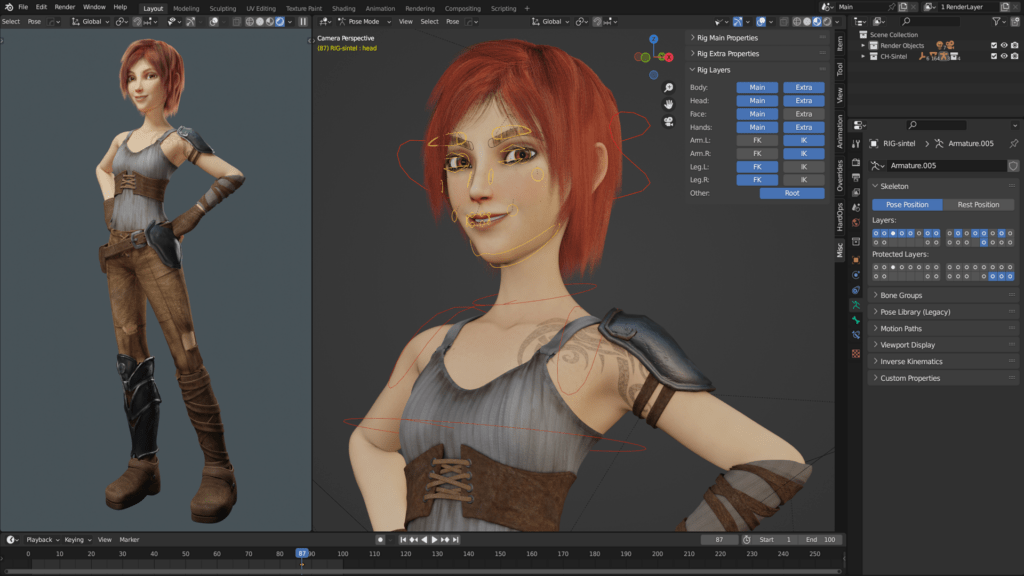
When a character transitions into a 3D video game engine (such as Unreal Engine or Unity), the production pipeline shifts from traditional 2D animation to real-time computer graphics.
Instead of hand-drawing frames, the game engine must calculate and render the character’s 3D mesh 60 to 120 times per second in real time on the player’s console or PC. Game developers operate under strict Polygon and Shader Budgets. To prevent hardware frame drops and overheating, 3D character artists simplify complex clothing geometry into low-polygon meshes, utilizing compressed texture maps and normal maps to simulate depth rather than rendering real geometry. As a result, 3D game models often look slightly stiffer and less fluid in facial expressions compared to hand-drawn 2D animation.
Media adaptation matrix: Technical limitations vs. visual characteristics
To understand how technical pipelines force character design changes, review this operational comparison matrix:
| Media format | Primary technical constraint | Necessary design adaptation | Final visual result |
| Manga (Static 2D) | Black-and-white print resolution; page space limitations. | High line complexity, detailed shading via screentones, sharp linework. | Rich, highly detailed static illustrations with strong ink outlines. |
| Anime (Hand-Drawn 2D) | Strict 24fps frame budgets; human drawing speed & tightness of deadlines. | Line Budget Reduction. Simplified hair, flat color blocks, reduced clothing folds. | Cleaner, streamlined designs optimized for smooth, fluid motion. |
| Video Game (3D Engine) | Real-time GPU rendering limits; target 60fps console performance. | Polygon Reduction. Geometry simplified into 3D meshes, baked textures. | Stiffer facial topology; dynamic lighting shaders replacing line art. |
| Promotional Art (Key Visual) | Single static frame; high resolution target for marketing banners. | Unconstrained line budgets, cinematic lighting, dramatic stylized poses. | Hyper-detailed, polished art designed solely to attract consumer attention. |
The role of master model sheets and settei documentation
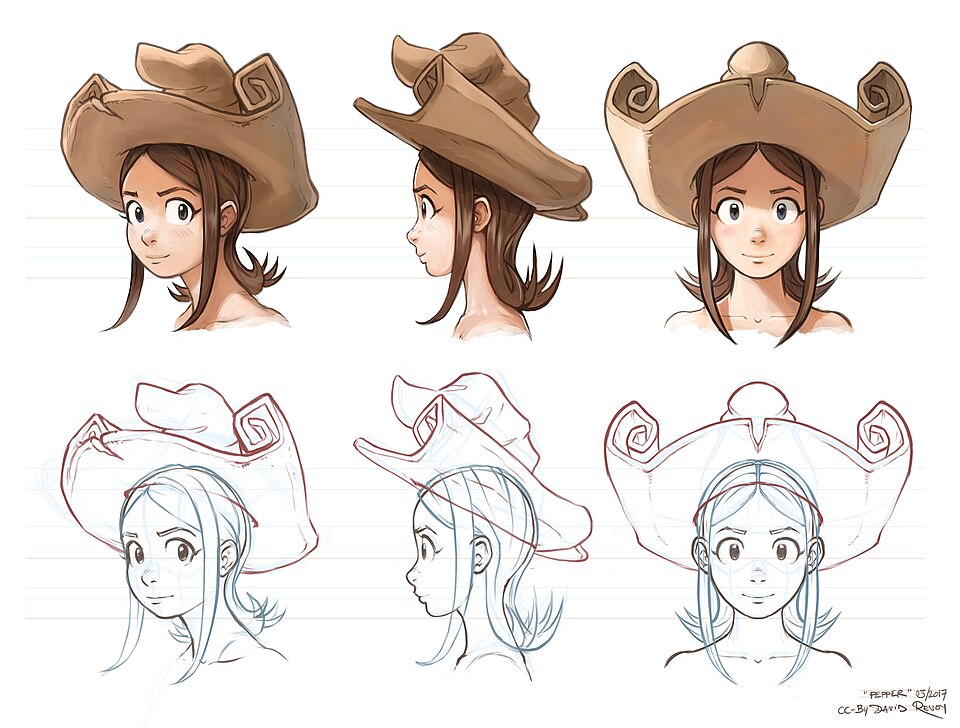
To maintain visual continuity when dozens of different animators or 3D artists work on the same project simultaneously, the production committee creates a master reference package known in the Japanese animation industry as Settei (設定 – Model Sheets).
The Settei package serves as the absolute visual law for the project. It includes:
- Turnaround Sheets: Displaying the character from front, side, three-quarter, and back angles with exact height ratios.
- Facial Expression Guides: Showing mouth movements, eye deformations during emotional scenes, and eyebrow angles.
- Color Palette Guides: Specifying exact RGB/CMYK color codes for highlights, base skin tones, and shadow areas under day, night, and indoor lighting.
Despite the existence of a master Settei sheet, individual Chief Animation Directors (総作画監督) and senior 3D character sculptors still imprint their personal artistic styles onto the final output. A Chief Animation Director reviewing drawings nộp lên by freelance animators will correct off-model frames using their own linework habits, explaining why a character might look subtly different between episodes or seasons even within the exact same anime series.
Primary canon sources and promotional illustration freedom
When attempting to determine a character’s true, canonical appearance amidst contradicting designs, you must establish a clear hierarchy of media authority.
The Primary Canon Baseline is always dictated by the original source medium. For a manga-originated franchise (such as One Piece or Jujutsu Kaisen), the author’s original manga drawings serve as the definitive design baseline. For an anime-original franchise (such as Neon Genesis Evangelion), the official production key visuals and master animation frames hold ultimate authority.
Conversely, Promotional Illustrations (such as collaboration cafe posters, event key visuals, or merchandise packaging) should always be treated as secondary, non-canonical interpretations. Production committees frequently commission guest illustrators, advertising agencies, or external merchandise artists to create promotional art. These guest artists are given freedom to alter character proportions, apply exaggerated lighting, and draw non-canon costumes specifically to maximize commercial appeal. Recognizing that promotional art is marketing rather than canon prevents confusion when a poster depicts a character in a style never seen in the actual story.