
Checking a mobile banking app immediately after purchasing an overseas digital subscription or app frequently triggers an unexpected moment of financial confusion. A user who completes a checkout for $9.99 on a foreign digital platform might discover a pending authorization hold of $11.50, or find two separate line items listed on their card activity statement.
These numerical discrepancies are rarely caused by merchant fraud or banking calculation errors. Instead, they reflect the multi-stage architecture of international card processing. Cross-border payments operate under a two-phase framework: an initial Pending Authorization Hold followed days later by Final Settlement Capture. Understanding how exchange rate floating windows, estimated tax cushions, micro-verification charges, and partial captures interact across this processing pipeline enables cardholders to manage their available balances and audit international transactions accurately.

The two-phase card processing lifecycle: Authorization versus capture
To understand why your banking app displays fluctuating charge amounts, you must trace the lifecycle of an international card transaction from the moment you click “Pay.”
Phase 1: Pending Authorization (T0)
When you submit your credit or debit card details to an overseas merchant, the merchant’s acquiring bank sends an electronic request through the card network (such as Visa or Mastercard) to your issuing bank. This initial step is the Authorization.
The issuing bank verifies that your account is active, checks for security red flags, and confirms that you have sufficient funds or credit. Rather than immediately transferring money out of your account, your bank places a temporary financial hold—known as a Pending Authorization—on a specific sum of money. This hold reduces your available spending balance while keeping the funds reserved exclusively for the merchant.
Phase 2: Final Settlement Capture (T+1 to T+5)
The actual transfer of funds occurs days later during the Settlement Capture phase. The merchant batches their daily completed sales and submits formal clearing files to the card network.
Your issuing bank processes the clearing file, releases the initial pending authorization hold, and permanently deducts the finalized, captured charge from your account. Because several business days elapse between Phase 1 and Phase 2, the final settled charge frequently differs from the initial hold amount.
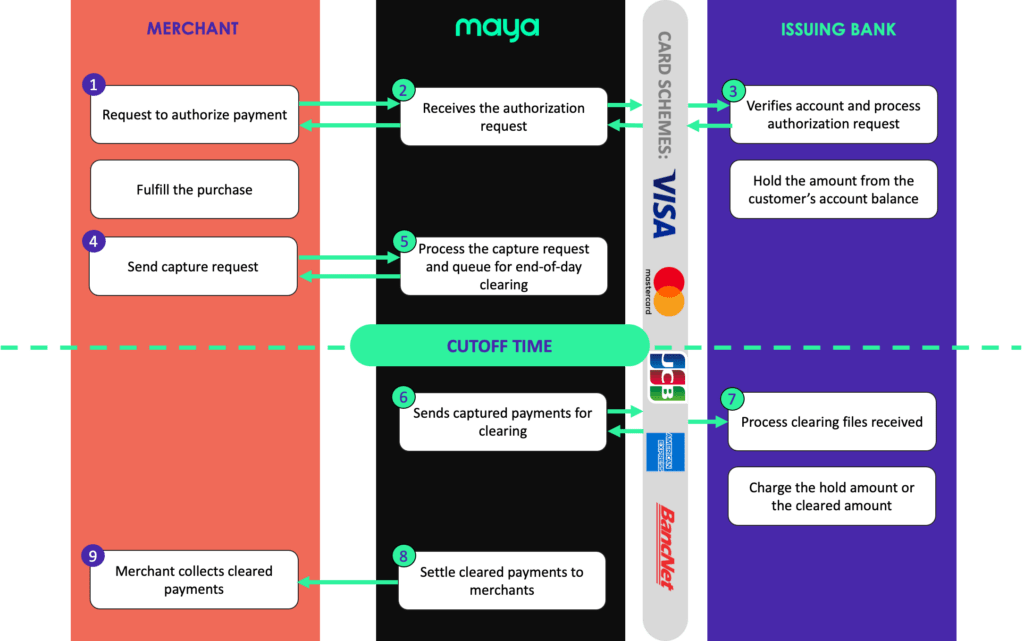
Functional comparison between pending authorization holds and final settled charges
To distinguish between temporary credit holds and permanent account deductions, review this functional comparison across processing stages:
| Transaction stage | Timing window | Purpose & calculation basis | Impact on cardholder account |
| Pending Authorization | Immediate at checkout (T0). | Verifies card validity; reserves estimated funds including tax/FX buffers. | Reduces available credit/balance; no actual money transferred yet. |
| Clearing & Settlement | 1 to 3 business days post-purchase. | Merchant submits final invoice; card network calculates exact exchange rate. | Final financial audit between acquiring and issuing banks. |
| Final Capture (Posted) | 3 to 7 business days post-purchase. | Deducts exact invoice amount; releases unused authorization hold padding. | Permanent deduction on bank statement; frees up remaining held credit. |
Core drivers of international payment amount mismatches
Several technical, financial, and operational variables cause the initial authorization hold to deviate from the final captured charge.
Foreign exchange conversion floating windows (Authorization date vs. settlement date)
The single most common cause of amount discrepancies in cross-border payments is foreign exchange (FX) rate floating windows.
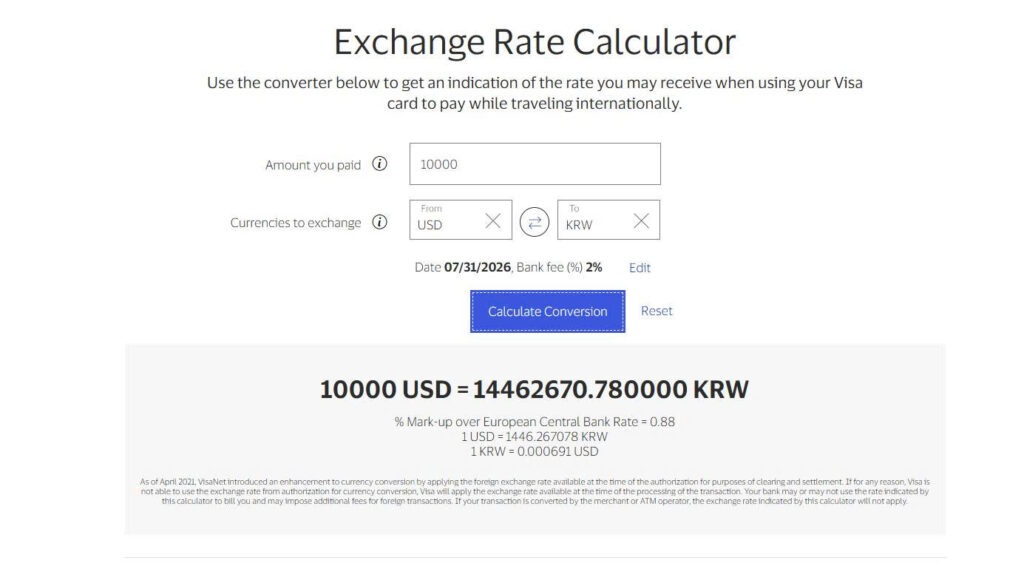
When you authorize a purchase in a foreign currency (such as USD, JPY, or EUR), your bank calculates the initial pending hold using the card network’s exchange rate on Day 1 (Authorization Date), often adding a small estimated currency buffer. However, the final charge is calculated using the official exchange rate on Day 3 (Settlement Date), when the merchant formally captures the funds. If currency markets fluctuate between Day 1 and Day 3, the final settled amount posted to your account will be higher or lower than the original pending hold.
Temporary micro-verification holds and estimated tax cushions
International digital platforms frequently apply pre-authorization adjustments to account for uncalculated fees:
- Micro-Verification Charges: Platforms like Apple, Google, or OpenAI often issue a temporary $1.00 or $2.00 authorization hold upon adding a new card to verify account validity. This test charge appears as a pending item but is cancelled automatically without ever being captured.
- Estimated Tax Cushions: When subscribing to a digital service, the merchant may not know your precise regional tax rate (such as local Value-Added Tax / VAT) at the exact millisecond of authorization. To ensure sufficient funds exist, the platform authorizes an estimated buffer (e.g., holding $11.50 for a $9.99 plan). Once local tax compliance is calculated, the merchant captures only the exact $9.99 plus actual tax, releasing the remaining hold.
Partial captures, prorated subscription upgrades, and trial cancellations
If you purchase multiple digital modules or software licenses in a single cart, the merchant may authorize the entire total upfront. If items are activated separately, the merchant executes partial captures, billing each module as it is delivered. While the remaining pending hold will eventually expire, both the partial capture and the original hold may appear simultaneously on your mobile banking app for a few days, making it look as though you were overcharged.
Similarly, if you upgrade or downgrade a digital subscription tier mid-month, the merchant authorizes the full new tier price but captures only a prorated amount based on the remaining days in your billing cycle.
Debit card overdraft risks and dispute escalation protocols
The operational mechanics of authorization holds impact debit cards far more severely than credit cards, making proactive account monitoring essential.
Debit card balance freezes vs. credit card line limits
When an overseas merchant places an authorization hold on a credit card, it merely reduces your available credit line; no actual cash leaves your bank.
On a debit card, however, a pending authorization hold instantly freezes real cash inside your checking account. If a merchant places an estimated $100 hold for a $70 order, that $100 is completely inaccessible to you for 3 to 7 business days. If secondary automated bills (like rent or utility direct debits) hit your account while those funds are frozen, you risk triggering expensive bank overdraft fees.
Discrepancy audits and merchant contact timelines
If you observe a mismatch on your banking app, do not panic or immediately file a fraud dispute on Day 1.
Follow this operational audit timeline:
- Wait 7 Business Days: Allow the standard clearing window to complete. In 90% of cases, temporary test holds or estimated tax buffers disappear automatically once the merchant’s final capture posts.
- Audit the Final Receipt: Compare the merchant’s final emailed invoice against the posted settled charge on your bank statement (not the original pending notification).
- Escalate to Merchant First: If the posted settled charge exceeds the agreed invoice price, contact the merchant’s billing support with your transaction authorization code.
- File a Formal Bank Dispute: If the merchant refuses to refund an unauthorized discrepancy, contact your card issuer to file a formal billing dispute backed by your original checkout confirmation receipt.